Entries in F1 (22)

Tuesday
Jan312012

Triple Threat - En jaune

The early to mid 90s was a great era for Renault. With utter domination of F1 under their belt, they indulged in flights of fancy. The Espace F1 was a carbon fiber minivan constructed over the chassis and engine of a Williams F1 car.  The Renault Sport Spider was a barebones, affordable mid-engined sports car in the purest sense. Does anyone know the story of the bike pictured?

Here's a fun French video all about the outrageous Espace F1, featuring one Alain Prost au volant:

I also love this weird paint scheme used for the launch of the racing version of the Spider:

And last but not least, here is awesome footage of French rally legend Jean Ragnotti, who demonstrates the rally capability of a bone stock Spider:

Thursday
Sep012011

Monterey Historics: In the Abstract

One thing I love about classic racing cars is the paint schemes! So pure. So iconic. Today's liveries are so convoluted, so filled with minor sponsor clutter. Only rarely do today's racing car graphics have the visual impact seen on the older cars. Click the shots below for the full gallery!

Wednesday
Jun222011

Eva Aeppli's 5 Widows - Memorial to the darker side of F1

Swiss-born artist Jean Tinguely was passionate about two things in life: Art and the Automobile, which he saw as a form of moving sculpture.  In addition to collecting both sculpture and cars, he was a fixture at the F1 circuit in the late 1960s and early 70s. He was close friends with Swiss driver Jo Siffert, and was present at Brands Hatch when Siffert was tragically killed. The photo below was taken the night before the accident, with Siffert at left, and Tinguely at right.

Clearly the death of so many friends and heros deeply saddened the artist, and one of the more interesting assemblages in his collection is his juxtaposition of Eva Aeppli's "5 Widows" with an ex-Jim Clark Lotus 33 from his car collection. 

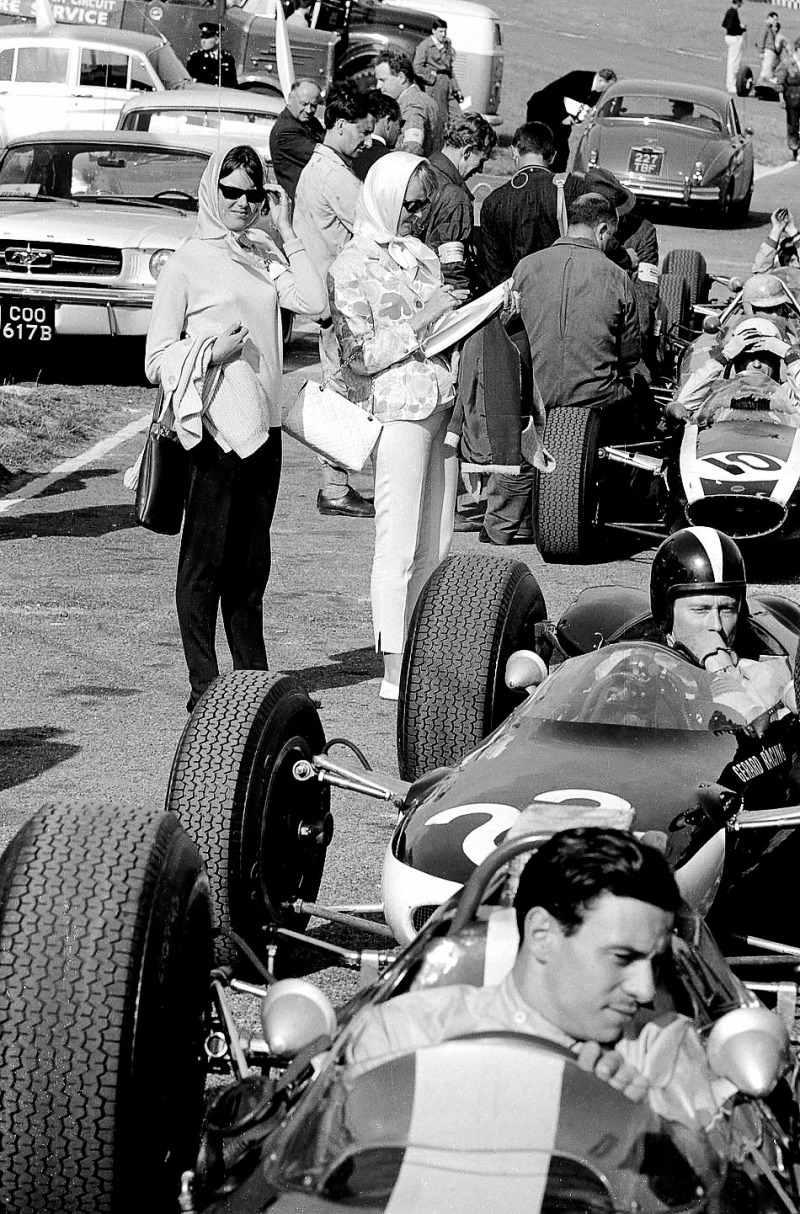
It's my understanding that Aeppli's work - consisting of 5 black-shrouded female figures in folding chairs- was meant to stand by itself. But Tinguely's placement of the racing car beside the women recalls the way that many drivers' wives would sit in folding chairs in the pits, lap-timing the cars of their husbands.  The assemblage was made around 1972, which was a time of unparalleled death and sorrow in the world of F1.  Since the car belonged to Jim Clark, and we know Tinguely was acquainted with Siffert and Bonnier, I added Jochen Rindt and Jo Schlesser to comprise a probable 5 drivers whose deaths between 1968 and 1972 left the darkest shadows on the sport at that time. Tinguely supposedly had this piece in his bedroom as a shrine to his lost friends and a very moving artistic commentary on the waste of life that was all too common in the racing community of that era.  Further, given the gender dynamics of the time, the mute suffering of the women becomes all the more poignant.

The Museum Tinguely  in Basel is having an exhibit of automotive-related art entitled "Car Fetish. I Drive therefore I am" that seems well worth a visit if you find yourself in Switzerland. The show is up until October, 2011.

via italianfuturism.org

Tuesday
Jun142011

Elf Scan 20: Patrick Depailler

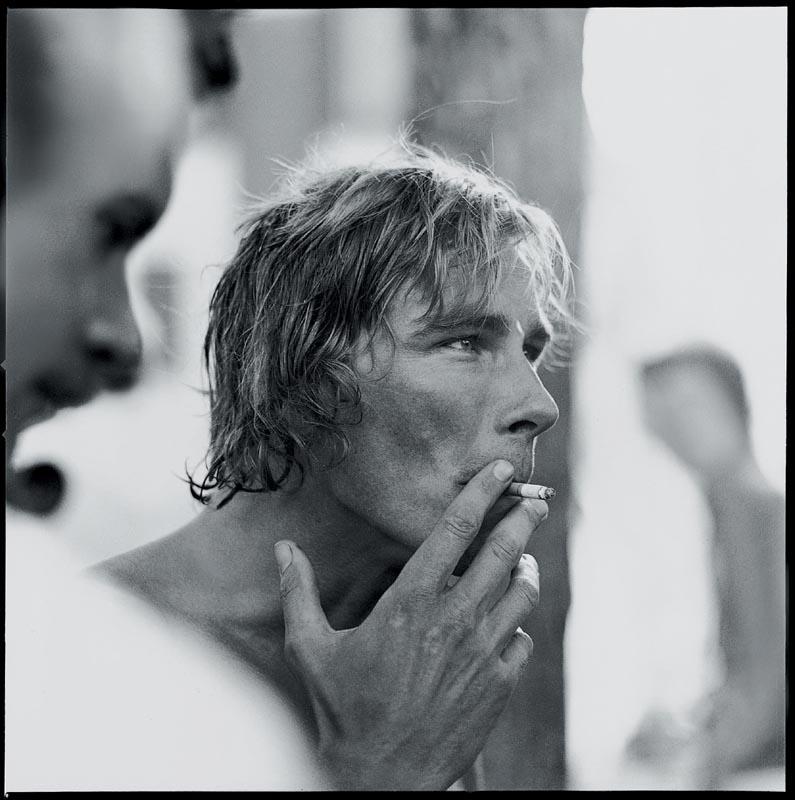
This is one of my favorite photos in the entire Elf Scan series.  A 25 year old Depailler looks past the camera with a gaze of intensity and focus.  Born in 1944, Patrick Depailler was one of the few drivers whose parents fully supported his interest in racing, and encouraged it.  He began by racing motorcycles, but after meeting Alpine boss Jean Rédélé, he transitioned to 4 wheels.  He began at Alpine as a mechanic, then a test driver, and finally a works racing driver.  At the time of this photo, his F1 career was still ahead of him.  His talent was never fully rewarded with a top-line drive, but he did manage 2 wins and 19 podiums in his 95 races in F1 -- most of them for Tyrell and Ligier.  Tragically he was killed in 1980, at age 35 during a test session at Hockenheim.

Wednesday
Jun012011

Elf Scan 19: Matra MS 11

Revealed at the 1968 Monaco Grand Prix, the MS11 was the first F1 car to be 100% Matra-developed, from its chassis to its 3L V-12 engine.  The MS11 was a complete monocoque, but it was slightly behind the leading edge set by Lotus in the previous season, as the engine did not play a structural role in the chassis, unlike the Ford-powered MS10, which was designed after the Lotus.  Jean-Pierre Beltoise piloted the car to 2nd in the Dutch Grand Prix that year, also beating the lap record.  The Matra V-12 was a magnificient engine, but Matra decided it needed more development before it could be a winner, and the political pressure to win was too great.  Therefore a Ford Cosworth DFV, rather than a French engine, would power Matra to the championship in 1969.