The sublime Sharknose 156 Dino F1 car shows off its ingenious Carlo Chiti mechanicals. The car was an extreme departure from Ferrari orthodoxy. So much so that when it won in a dominant fashion, Enzo felt threatened by the very men who created it for him, touching off one of the most cataclysmic political shakeups in Ferrari history. Chiti and his team resigned en masse to start ATS. Chiti would later go on to run Autodelta and assure his place as a legend in Italian motorsport.
This French or Swiss documentary has some spectacular period footage from the 1973 Targa Florio, which was to be the final year of the race as a Championship event. I know this weekend is Le Mans, but for me the Targa Florio really was the ultimate in insane road racing, even if it was never as much of a true test of machinery as Le Mans. Where else could you find prototype cars practicing on open roads with family sedans and ox carts driving around?!
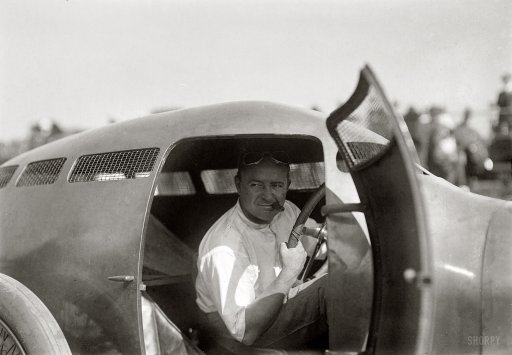
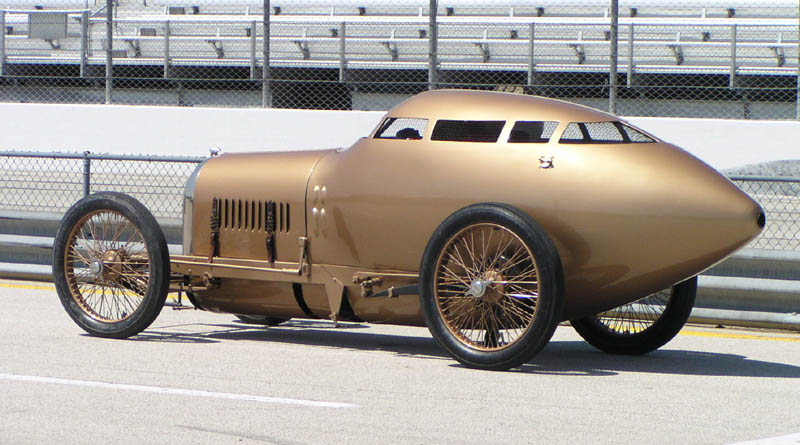
Click to enlarge to Hi ResolutionIf any single image could highlight how much racing has changed, and yet how much it has stayed the same in nearly 100 years of motorsport, this might be it. The car -The Miller Golden Submarine of 1917- is arguably the first streamlined circuit racing car. Here we see the dawn of a new age of technological advancement, yet the cage-like stone guards and skinny balding tires remind us how primitive the vehicle really was. Oldfield has the toughened, cigar-chomping look that speaks to the hardscrabble existence of many drivers at the time, who lived from race to race on starting money and worked on their own cars. But the confident look in his eye is that of a racer. And I suppose that look will never change. Click the photo above to see it in super hi res!
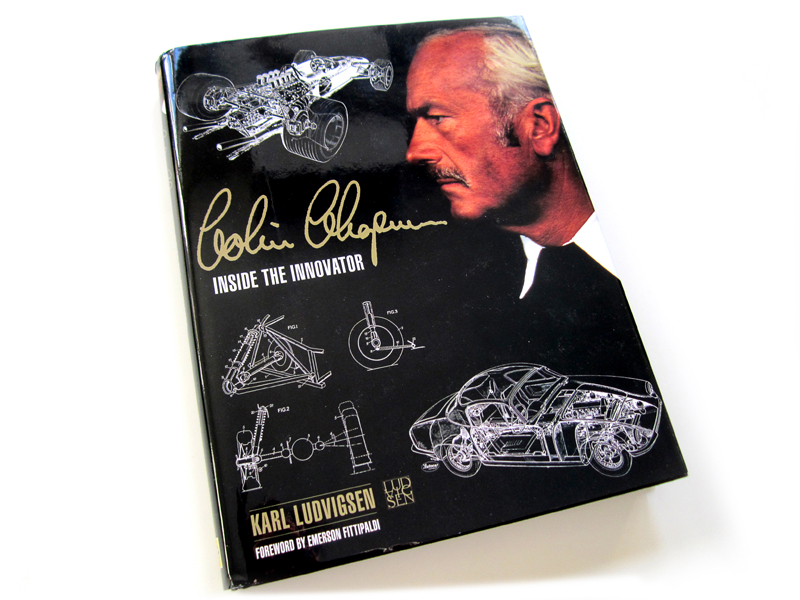
Last week, I wrote a piece lamenting that many of today's car books are either glossy coffee table books of car porn, or poorly-produced works by passionate amateurs, lacking in finish and presentation. This week, I'd like to tell you how Karl Ludvigsen's incredibly detailed and richly illustrated new biography of Colin Chapman delivers satisfaction on every level.
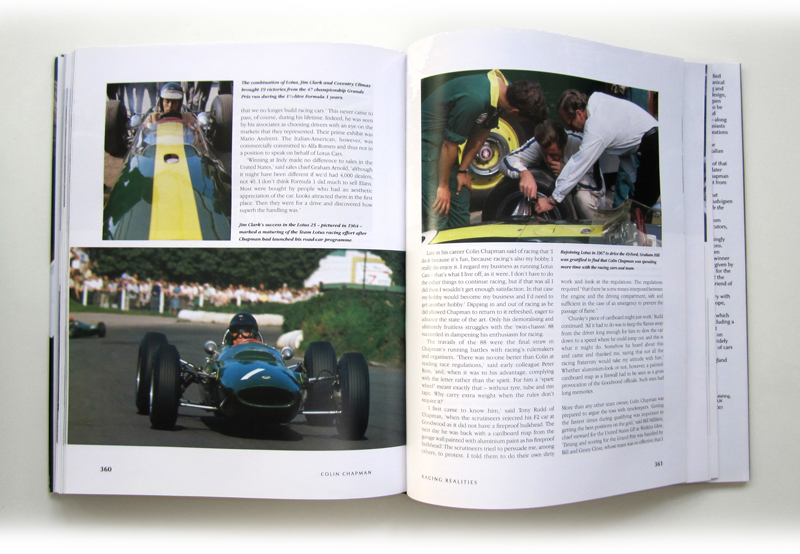
If you are a regular reader of this site, I don't need to go into much detail about who Chapman was, or the man's numerous accomplishments. But to summarize in one pithy sentence, Colin Chapman was a brilliantly innovative creator of racing machines whose ideas fundamentally changed the sport on nearly every level. And Ludvigsen's book is a definitive compendium of all the ways, large and small, in which Chapman left his indelible legacy on Formula One and Sports Car design. Colin Chapman: Inside the Innovator is --to my knowledge-- the most comprehensive volume yet written about the charismatic and ingenious founder of the Lotus marque. Ludvigsen, arguably one of the foremost automotive historians around today, has left no stone unturned in his categoric analysis of Chapman's genius. Rather than organize his book in chronological fashion, the author has adopted a thematic approach for this nearly 400 page work.
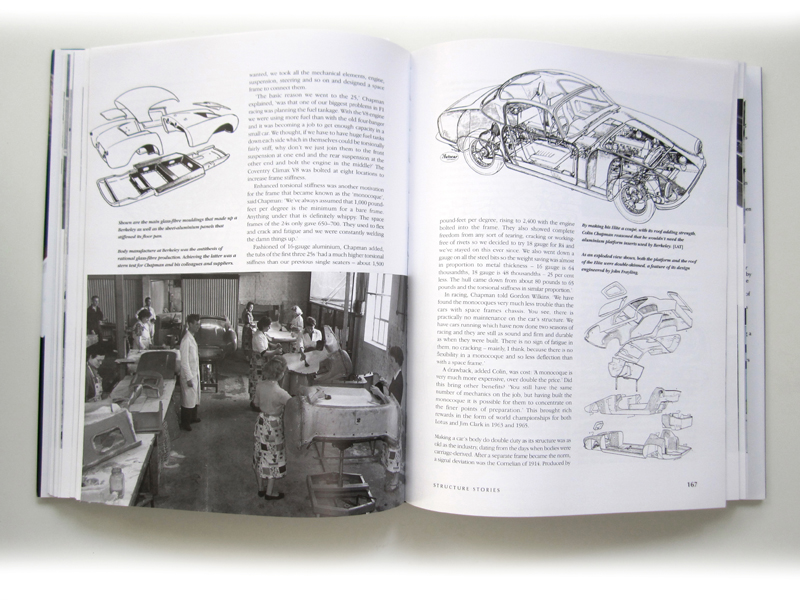
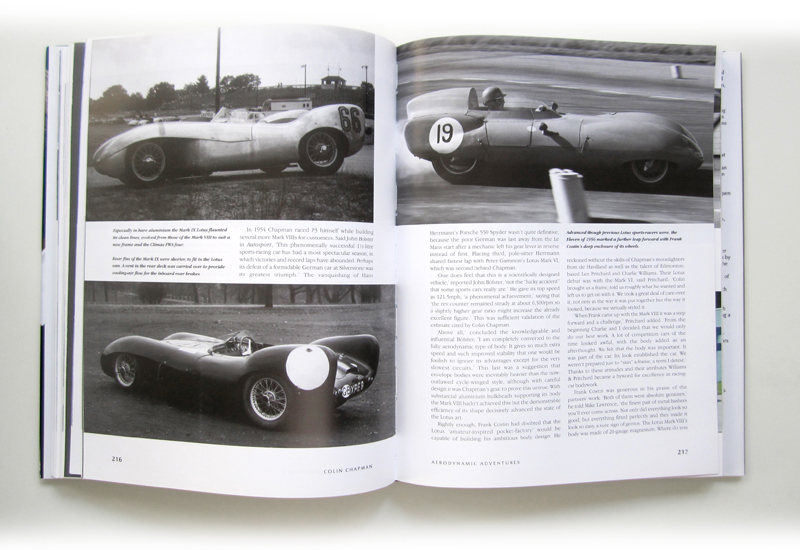
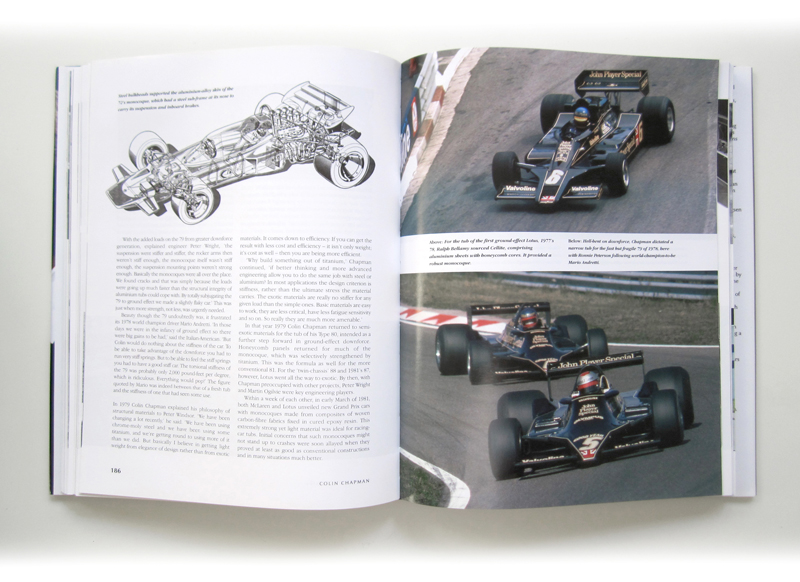
This allows a more casual reader to digest the book in sections, so if you just want to know about how Chapman approached his chassis design, you can go directly to the chapter about Chassis and Structure, and skip all the engine and gearbox bits. My favorite chapter was the "Discovering Downforce" section, which details how Chapman and his designers gradually came to understand the Ground Effect in the wind tunnel, and how they translated these experiments into devastatingly effective racing machines that dominated Formula 1 in the late 1970s. I had no idea how technically-minded Mario Andretti was, but he comes across in the book as an extremely astute strategist and test driver, aside from being a fast-as-hell racing champion. His observations and anecdotes about his time with Chapman are particularly insightful.Other sections of the book focus on technical aspects such as suspensions, engines, and chassis design, as well as less concrete topics such as Chapman's management style and his conceptual approach to design. In short, it's a huge all-you-can-eat buffet of facts, analysis, interviews, photographs, and technical drawings, and there is something for everyone's taste!
The picture of Chapman that emerges is of a charming yet un-knowable Sphinx. One might even say he had certain psychopathic characteristics such as narcissism, lack of empathy, lack of personal accountability, and his manner of instinctively knowing how to treat people according to how he could best manipulate them (either through flattery or brutality). Either way, he was a very canny reader of other people, and adept at getting the best out of those around him, even if he had to run roughshod over others' pride. The death of his dear friend Jim Clark, in a Lotus F2 car in 1968 is the only point at which we see Chapman's human emotions really come to the fore as he became engulfed in deep mourning and sorrow.Although the text is sometimes very dense in the more technical chapters, and reading the book cover to cover took me quite some time (I always read every book I review from cover to cover, folks), I found it to be a very illuminating portrait of Chapman in all his guises: engineer, businessman, side show impresario, mentor and tyrant. The only areas that the book covers very little are Chapman's personal life as well as his later financial dealings with John Z. DeLorean that might have ultimately landed him in jail for defrauding investors had he not suddenly passed away in 1982 at the age of 54. Perhaps this omission was intended to focus more on solid history than on gossip, and more on innovation than pure biography, but it seems that a work this comprehensive nature should make more than a passing mention of Chapman's involvement with DeLorean, since it defined the last few years of Chapman's life. Perhaps Ludvigsen didn't want to tarnish the luster of Chapman's genius by detailing his financial chicanery, but this was nevertheless part of what made Chapman such a complex and interesting character --he was definitely a shady dealer by all accounts-- and might have added some spice to the read.
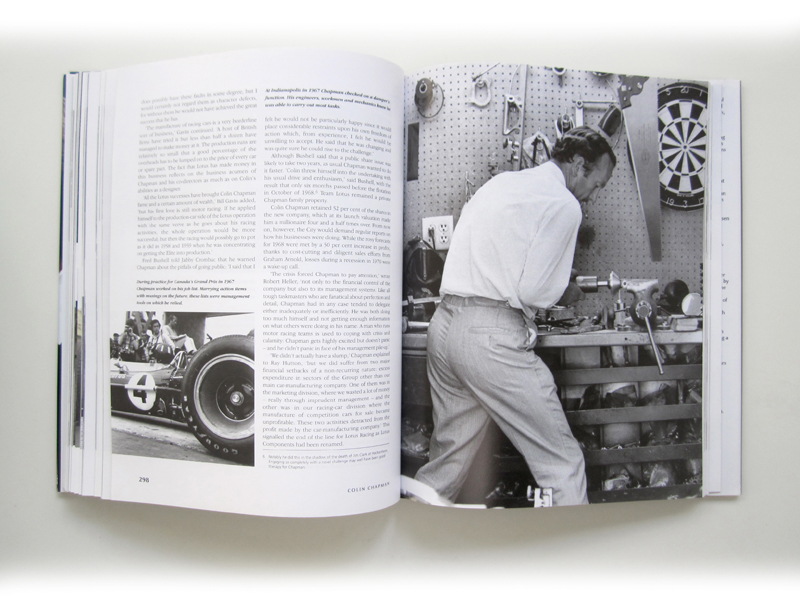
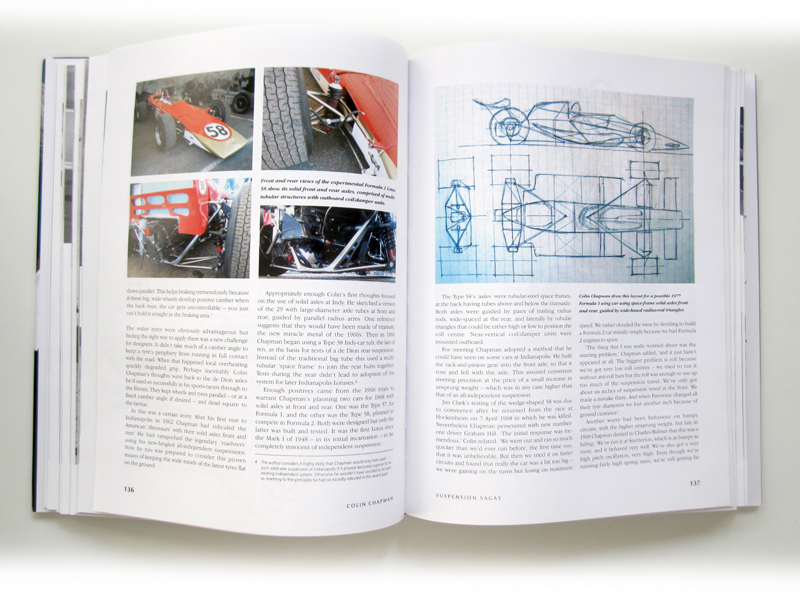
Through Ludvigsen's meticulous and expansive documentation of Chapman's exploits, one comes to understand the incredibly fertile nature of Chapman's mind and the incredible passion for success at all levels that drove him and sustained him through peaks and valleys in F1 as well as the production car and boat businesses. Interviews with colleagues and drivers, as well as a wealth of historical documents and photographs weave a vibrant and fascinating portrait that is at once informative as well as fun to flip through and just look at the pictures. One can spend hours studying the reproduced technical sketches drawn in Chapman's own hand, or reading facsimiles of his manifesto-like design briefs for his engineers. The thematic nature of the book serves to reinforce the breadth and depth of Chapman's genius. When you come to understand all the various skills and principles he had to master in order to design his cars, from gearboxes to fluid dynamics, not to mention all the balls he had to keep in the air as a businessman and team manager, it's nothing short of a remarkable life. In my opinion, Ettore Bugatti and Henry Ford are the only other geniuses of this type in the history of the motorcar, who did everything from technical design to administration, to management, and did it so very well. Much has been written about the other two men. At last there is a book that elucidates Chapman's staggering talents in such a complete way.
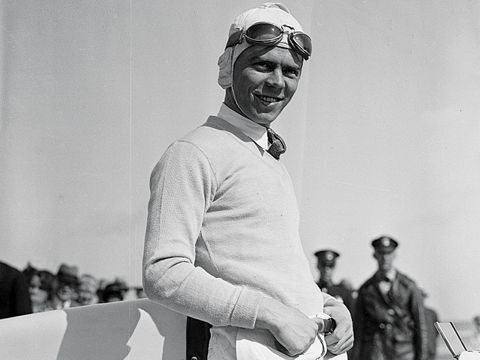
Frank Lockhart is a name that has faded into relative obscurity, but in the mid 1920s he was one of the finest racing drivers in North America. After winning the Indianapolis 500 on his rookie attempt, in 1926, Lockhart and his Miller racing car went from track to track winning races and breaking records on the great wooden board-paved speedways that were common to the era.
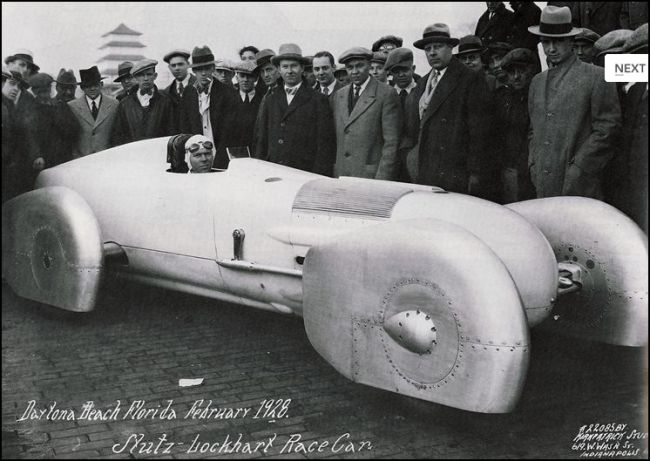
With dashing looks and speed to match, Lockhart was a youthful success: He had just turned 23 when he won Indy. But even more impressive than his bravery and skill behind the wheel was Lockhart's innate engineering ability. He began modifying his Miller racing car to make speed runs in California on dry lakes, achieving new records in 1927. This success attracted the attention of the Stutz automotive company in Indiana, who financially backed Lockhart as he designed and constructed a purpose-built car for an all-out assault on the world land speed record at Daytona Beach in 1928.
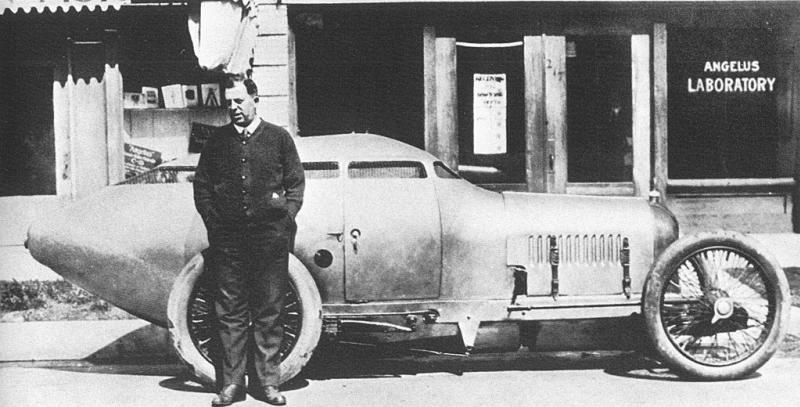
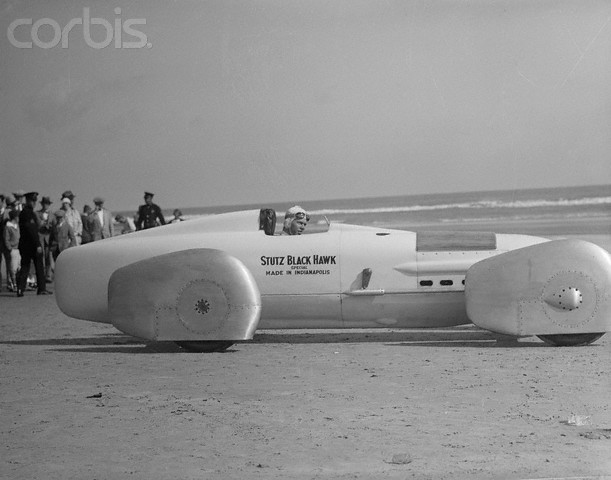
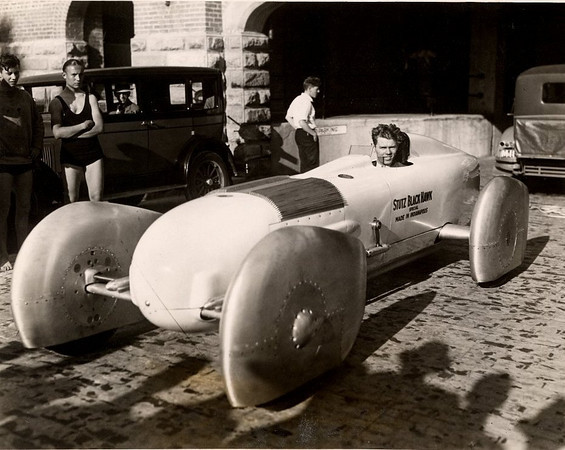
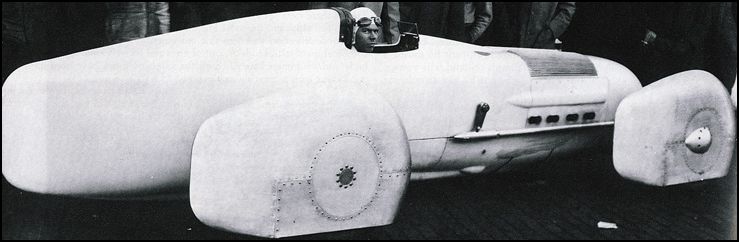
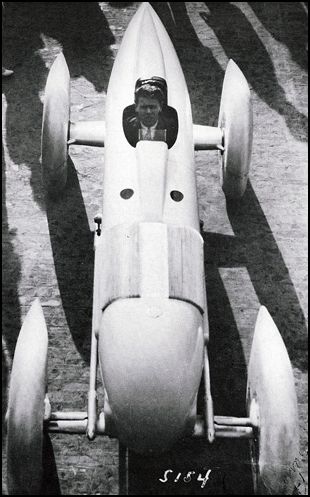
Aside from its breathtaking beauty and gorgeous streamlined shape, the Stutz Black Hawk bristled with innovative design features. In an era when Malcom Campbell's Bluebird record cars weighed thousands of pounds and were powered by enormous aero engines of massive displacement, Lockhart's design was a tiny white and silver dart in comparison. Not much larger than a Miller Indy car, the Black Hawk was dwarfed by most contemporary record cars, and featured a compact 16 cylinder engine, which was essentially 2 straight eights mated together. The body and undercarriage were completely faired in, with low frontal area. Suspension and wheels were enclosed in sleek aluminum spats for even greater drag reduction. Because the car was intended only for record runs, the spats remained fixed and did not turn with the wheels, which had only a few degrees of lock. Instead of radiators that would increase drag, cooling was achieved using an internal ice container!
(Click the image above to enlarge)
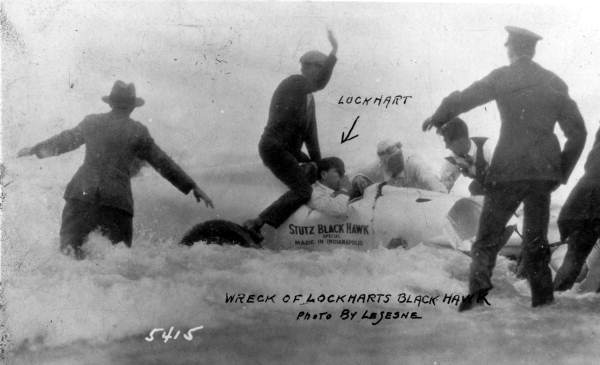
Lockhart's first runs in the car in February of 1928 were disappointing, but it was soon discovered that overzealous streamlining was robbing the car's engine of air. Modifications were made and the car gained in speed. Unfortunately during a subsequent run, Lockhart hit a nasty bump in the hard-packed beach sand, causing his car to be tossed into the sea with him trapped inside. Thanks to intrepid spectators, the hapless driver's head was kept above the surf until he could be extracted, saving him from drowning. He was otherwise not seriously injured.
The car, however, was seriously damaged and required a rebuild at the Stutz factory. This mishap represents a turning point Lockhart's fortunes. Because of the unexpected cost of rebuilding the car and staging a second record attempt, Lockhart's funds were in serious trouble. He had been using race-proven Firestone tires up to this point, but in order to scrounge up more sponsorship money, he switched to Mason Tires, which was a less reputable brand.
By April, Lockhart was back in Daytona with a freshly rebuilt car running on Mason Tires. At this point in the season, the beach was not in optimal condition, but with his money running out Lockhart knew it was his last chance to break the record. His third run, against a headwind, saw him top 200mph. The record to beat was 207mph. Feeling that victory was within his grasp, Lockhart quickly had the car turned around to make his 4th run, which would hopefully break the record. In his haste to complete the final run before high tide came in upon the beach, Lockhart did only a cursory inspection of his tires, and failed to note that a seashell had damaged one of his tires on the previous run.
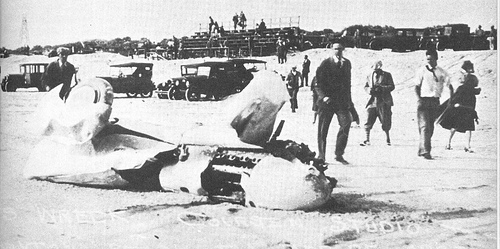
So it came to pass that on April 25, 1928, Frank Lockhart made his fateful final run in the Stutz Black Hawk. At approximately 225mph, his damaged tire exploded, causing him to completely lose control of the car. The vehicle overturned multiple times, throwing Lockhart from the car and killing him instantly. Legend has it that Lockhart's lifeless body landed not far from where his wife was watching in horror. He was only 26 years old.
Below is an "accident report" that diagrams the path of the car in its final moments.
I have been fascinated by this tragic story since boyhood, but only this week did I learn that there is actual newsreel footage of the fatal accident. You can see Lockhart's body being ejected as the car makes its final gruesome somersault. A warning: Though the footage is grainy Black and White, sensitive viewers may still find it disturbing.

 Friday, January 11, 2013 at 6:02PM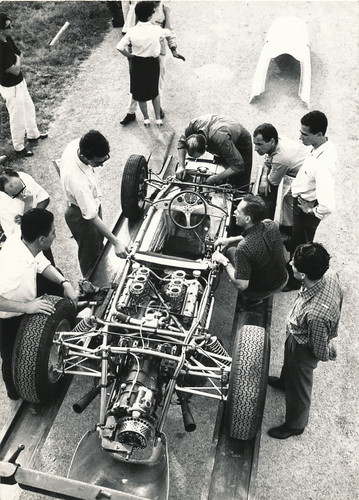
;)
;)